
Pronation vs. Supination: What’s the Difference and Why It Matters for Your Shoes
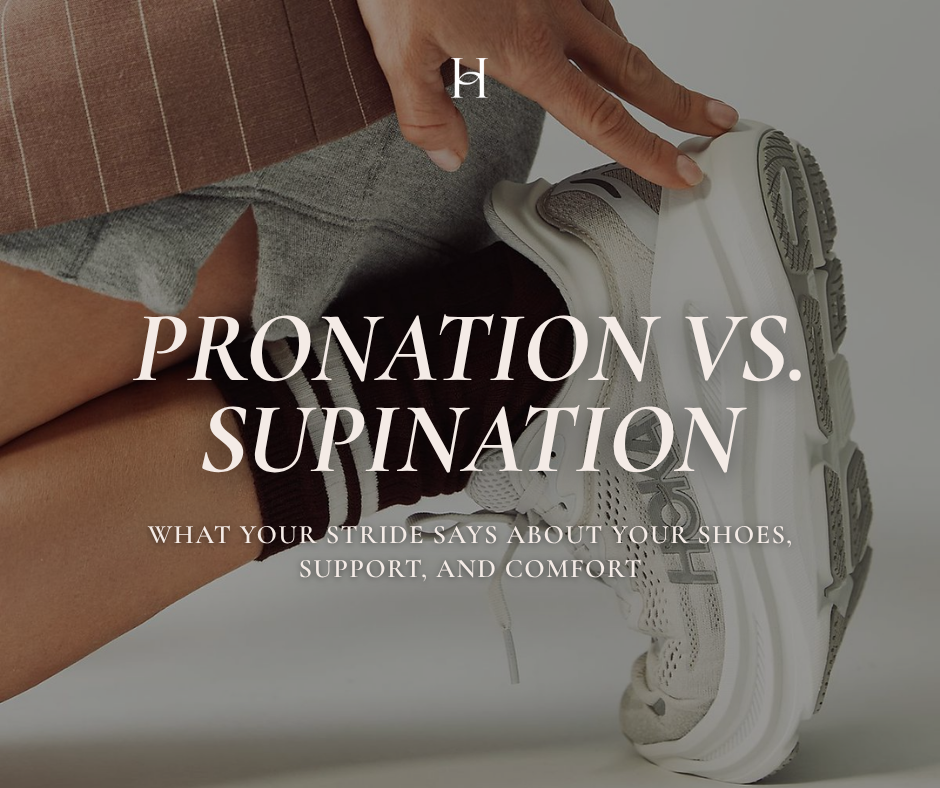
When shopping for comfortable shoes, you may hear terms like pronation and supination come up. They sound technical, but they simply describe how your foot naturally moves when you walk or run. Understanding the difference can help you find shoes that feel better, support your stride, and keep you comfortable throughout the day.
At Hansen’s, we always believe the right shoe starts with the right fit. Here’s a simple breakdown of pronation, supination, and what to look for when choosing your next pair.

What Is Pronation?
Pronation happens when your foot rolls slightly inward as it lands. This is a normal part of walking and running because it helps absorb impact and distribute pressure across the foot. The issue happens when the foot rolls too far inward, which is often called overpronation. People who overpronate may notice that their arches feel lower or that the inside edge of their shoes wears down faster.
Common signs of overpronation can include:
- Shoes wearing down more on the inside edge
- Feet or ankles rolling inward
- Lower arches or flatter feet
- Discomfort in the feet, ankles, knees, or hips after long periods of walking
For overpronation, supportive shoes are usually the best place to start. Look for styles with good arch support, a stable heel, and structured cushioning. Brands like HOKA, On, Dansko, and Birkenstock offer great options depending on your lifestyle and comfort needs.
We often recommend styles like the HOKA Arahi 8 or Gaviota 6, On Cloudrunner 3, Dansko Professional clog, and Birkenstock Arizona for dependable support depending on your lifestyle and comfort needs.
What Is Supination?
Supination is the opposite movement. It happens when your foot rolls outward as it lands. A little outward movement is normal, but too much supination can place extra pressure on the outer edge of the foot. People who supinate often have higher arches, and their shoes may wear down faster along the outside edge.
Common signs of supination can include:
- Shoes wearing down more on the outer edge
- Higher arches
- Feet feeling less stable while walking
- Pressure on the outside of the foot
- Occasional ankle rolling or discomfort
For supination, cushioning is key. Since the foot may not absorb impact as evenly, softer and more flexible shoes can help create a smoother, more comfortable feel. Look for styles with plush cushioning, a neutral base, and enough support to keep your foot feeling secure.
Some great styles to try for supination include the HOKA Bondi 9, HOKA Clifton 11, On Cloudmonster, and On Cloudswift 4.
The Bondi 9 is a great option for maximum cushioning and everyday comfort, while the Clifton 10 offers a lighter cushioned feel for walking, running, and daily wear. The On Cloudmonster is a good pick for anyone who likes a bouncier, more responsive ride, and the Cloudswift 4 works well for city walking, errands, and everyday movement with soft landings and a secure fit.
Because supination can put more pressure on the outside of the foot, it is usually best to avoid shoes that feel too firm, too minimal, or too narrow. A cushioned neutral shoe can help soften impact and keep your stride feeling more balanced.
How to Tell Which One You Have

One of the easiest ways to get a general idea is to look at the bottom of a pair of shoes you wear often. If the inside edge is more worn down, you may overpronate. If the outside edge is more worn down, you may supinate. If the wear looks fairly even, you may have a more neutral stride. Of course, every foot is different. The best way to know what works for you is to try on shoes and pay attention to how they feel. Comfort, support, and fit matter more than just choosing a shoe based on a category.
Why It Matters When Choosing Shoes
Pronation and supination can affect how your body absorbs impact. The right shoes can help support your natural movement, reduce pressure, and make everyday walking, standing, errands, work days, and travel feel easier. If you overpronate, you may feel better in shoes with added stability and arch support. If you supinate, you may prefer shoes with more cushioning and a softer feel. If your stride is neutral, you may have more flexibility in what styles work for you.
Find the Right Fit at Hansen’s
Finding the right shoe does not have to feel complicated. At Hansen’s, our team can help you understand your foot type, try on different styles, and find shoes that match your comfort needs and lifestyle. We carry options designed to help you feel good on your feet.
Stop by our in-store locations at Westfield Valley Fair and Oakridge Mall or shop online to find your next favorite pair.
Comments